
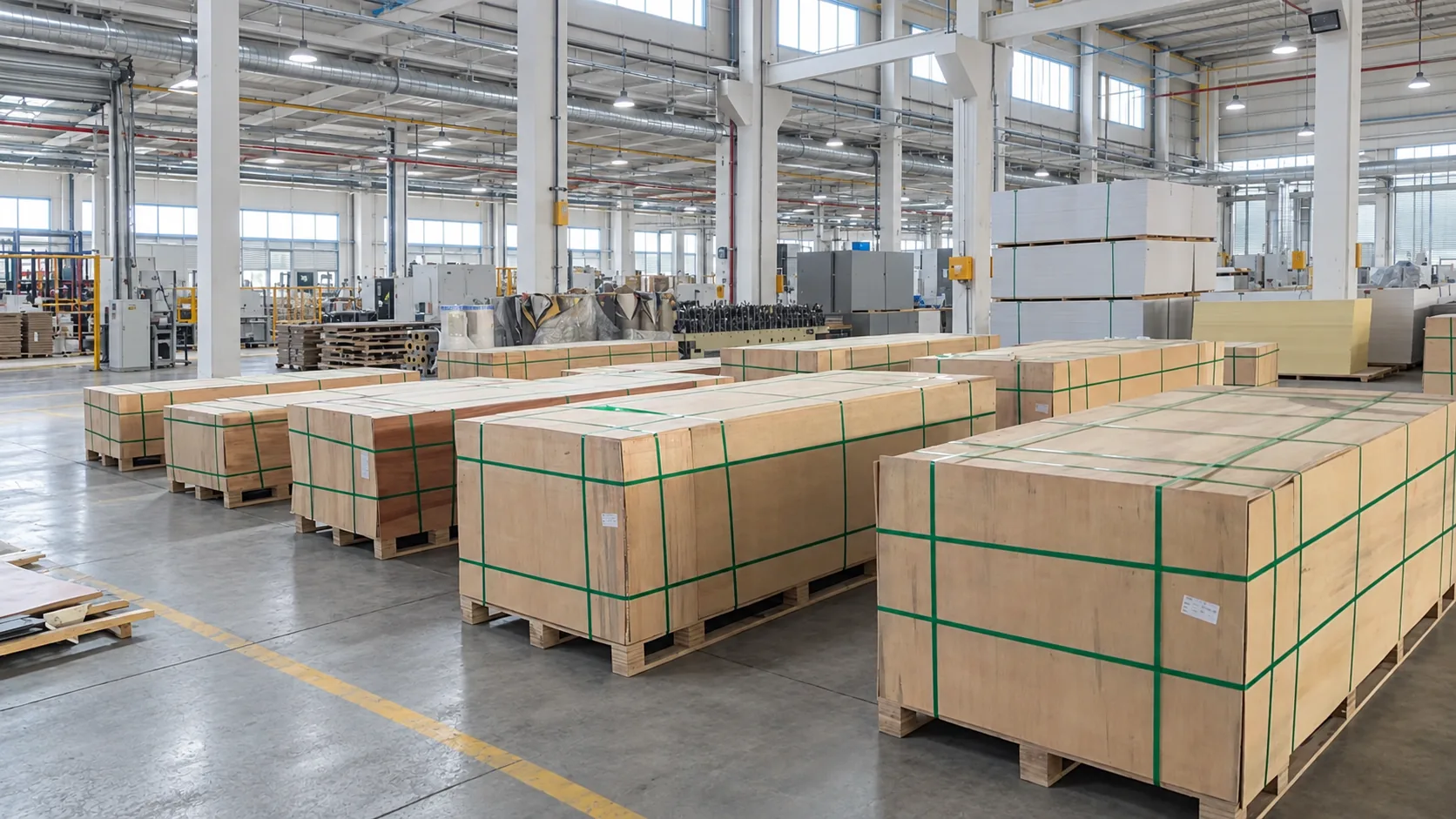
Packing photos are often sent just before an overseas order leaves the factory. They can help you spot visible problems and prepare the receiving team. But one photo of closed crates tells you very little.
Ask for a short sequence that connects the products, packages and packing list.
Check that the photos belong to your order
Start with identification. Look for a project reference, purchase order, product group or package number.
If the photos cannot be linked to your order, ask for clarification. A busy warehouse may contain several projects at the same time.
Customer details do not need to appear in public images. A clear internal reference is enough for the buyer and supplier to match the record.
Ask for photos before and after packing
A useful sequence may show:
- components before packing;
- protection on visible faces, corners and edges;
- the arrangement inside the package;
- the closed package;
- labels or package references;
- the packages ready for loading.
The right sequence depends on the product. A door, panel and cabinet package will not need identical protection.
Look at visible protection
Zoom in on the areas most likely to be damaged during handling:
- finished faces;
- corners and long edges;
- handles or projecting parts;
- glass or other fragile items;
- loose accessories;
- contact points between products.
Photos cannot show every hidden layer. If a particular packing method matters to the order, it should also appear in the written agreement.
Match the photos to the packing list
The packing list is still the main reference. Use the photographs to make it easier to understand.
Check whether:
- the visible package count makes sense;
- labels can be matched to the list;
- rooms, floors or product groups are easy to identify;
- accessories and smaller packages are included;
- unusual or separate items are clearly shown.
If a package was changed or repacked, make sure the latest list reflects that change.
Think about unloading before shipment
Packing photos can reveal the size and shape of the packages. Share them with the destination team before arrival.
The team may need to check:
- forklift or lifting access;
- unloading space;
- doorway and lift sizes;
- temporary storage;
- the order in which packages should be opened.
Use verified dimensions and weights for the actual unloading plan. Perspective in a photograph can be misleading.
What the photos cannot confirm
Packing photographs do not prove that every item is present or that hidden protection matches the order. They also cannot confirm weight, dimensions, destination compliance or the absence of concealed damage.
Those points need the relevant documents, measurements or inspection record.
A simple request you can send
Ask the supplier for:
- an order reference and date;
- one overview before packing;
- representative protection details;
- closed packages and readable labels;
- an overall staging or loading view;
- the latest packing list as a separate file.
For a large order, agree in advance whether every package needs to be photographed or whether representative records are enough.
Good packing photos do not need to look polished. They need to make the order easier to check and receive. GREENWAY reviews packing and available records according to the product, quantity, destination and agreed scope.